Work of Art

previous next
1 of 23

Fiji neckrest


Fiji Islands Neckrest

kali,  carved in sections from vesi intsia bijuge wood, the elegant pillow of cylindrical form and tapering slightly towards each end, the terminus on the cross piece deeply incised with concentric circles, and supported by two sets of anthropomorphic legs fashioned as bulbous human thighs, and terminating in flat pad-like feet, two carved with delicately tooled margins, and attached with strands of braided coconut fiber, magimagi, concealed within the cavity between the thighs, stone carved and finished with a sharkskin rasp.
length 12 1/4 in. 30.5cm

sold

Large Roman glass perfume vessel


Eastern Empire. 1st - 2nd cent. AD

7 3/4 inches high/19.8 cms
intact
Still containing traces of its original perfume
 

Sold

Byzantine perfume flasks


Eastern Mediterranean, 9 - 12th cent. AD showing Islamic influence

4 inches high/10 cms

Consisting of two glass perfume flasks w/ aplicator. One flask has its original seal and contains perfume.

All are contained in a textile pouch which also shows Islamic influence

Sold

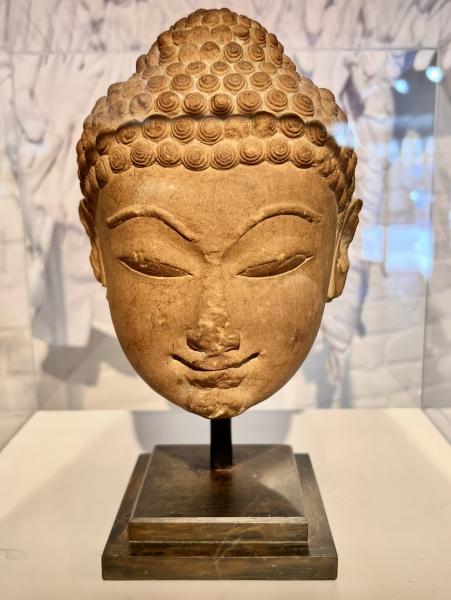
Buddha

Tibet
gilt-bronze 
16th century
8 inches high


sold

Ptolemaic Figure of Horus

Ptolemaic Statue of Horus

granite

18 x 13 8.5 inches

William Tilden Blodgett, 1823 - 1875, acquired whilst living in Europe and traveling to Egypt where he also spent time acquiring art for The Metropolitan Museum of Art.  He was a founding member and the first Chairman of the Museum.

The Horus Falcon passed down through the Blodgett family to the great grandson, Stephen Whitney Blodgett, Jr  

sold

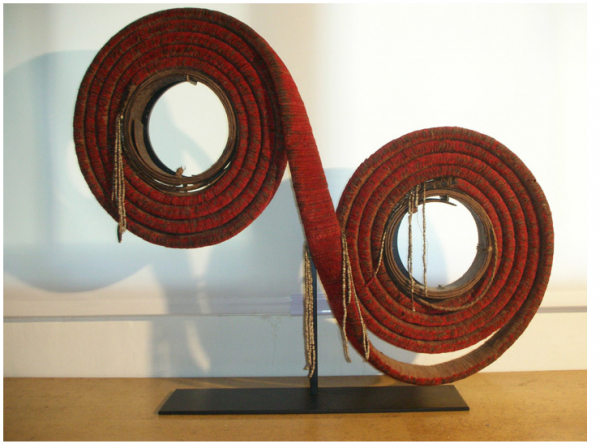
Solomon Islands

Santa Cruz

19th century


sold

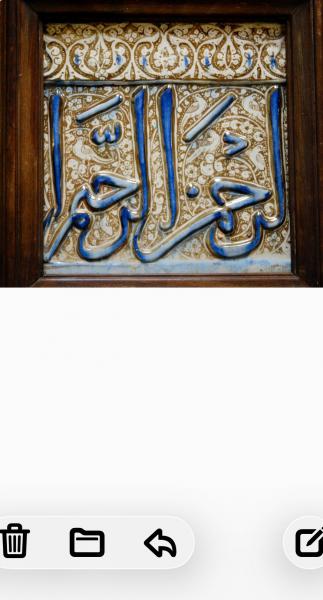
Islamic tile


Damascus, Syria

16th century.

A pair of square stone paste tiles painted in cobalt blue, manganese purple, turquoise and apple green. Outlined in black, the design shows part of a vase in apple green on the left of the composition decorated in a profusion of blue and white arabesques and split palmettes with a turquoise band around the rim and base. Reserved in white and green against a deep blue background, a split palmette, a carnation and small rosettes float between long flower stems and water reeds.
16th century.

21 x 10.5 in. {53.4 x 26.6 cm.}

Ex: collection Lockwood de Forest {1850-1932}

Mangbetu ceramic

Mangbetu terracotta vessel
 
 
12.5 inches / 38.1 cm high
Ex. collection: Harold Rome {1908-1993}, New York


sold

Islamic

A stone paste square border tile painted in underglaze cobalt blue, apple green and turquoise. The border on the right side, a vigorous cintamani design in white and turquoise, outlined in black, is reserved against a cobalt blue ground. A thin turquoise guard stripe on the extreme right vertical edge. The remaining area, which is also reserved against a cobalt blue ground, shows a tulip, foliage and an apple green cusped medallion containing a tulip head in a spray of flowers rising from a floral palmette. Remains of an ogival lattice in turquoise with a white serrated edge and containing plum blossoms emanates from the top and bottom of the cusped medallion.
16th century.

10.5 x 10.5 in. {26.5x 26.5 cm.}

c.f. Ettinghausen, R. Islamic Art in the Metropolitan Museum, 1972. One of the group of Damascus tiles with the use of apple green mentioned on p.104 when referring to the Lockwood de Forest collection.

Ex. collection Lockwood de Forest {1850-1932}

Antiquities


Relief plaque/trial piece showing a Queen or the Goddess Isis wearing a Vulture headress

Ptolemaic Period circa 305 - 30 B.C.

limestone

5 3/4 x 4 3/4 inches {irregular}

Provenance: Early British collection

See another similar relief with the more fleshy treatment of the nose and mouth, Bas relief portrait of Cleopatra in The Oriental Institute of the University of Chicago

The vulture headress became an attribute of royal women in the Old Kingdom, originally linking the queen with Nekhbet, the tutelary goddess of Upper Egypt, although it came to be associated with other goddesses. When worn by royal women, the headress was likely intended to underscore the divinity of the queenship. Though princesses holding religious office and noblewomen were portrayed in the vulture cap during the New Kingdom and Third Intermediate Period, its use was again limited to queens and goddesses in the Ptolemaic era.

sold

Flemish alabaster Scupture of Mary and Baby Jesus


High relief of Mary and the Christ Child

alabaster

Northern Europe, possibly Germany

17th century

7.25 x 6.75 inches


Sold

Islamic scissors


A pair of steel traveling calligrapher's scissors with gold koftgari work, the central screw decorated with a diamond and rubies,

with collapsible handles.
18th century
8 1/8 inches long

Egypt amulet


Opening of the mouth amulet

breccia

3 ins

Pre Dynastic Egypt

Yombe Maternity


The Burniaux Maternity

Democratic Republic of Congo, Yombe
late 19th/early 20th century
painted wood
64.70 cm / 25 7/16 inches


sold to the Cleveland Museum of Art

Persian Lamp Stand


Safavid,  circa late 16th century

brass, cast, engraved and inlaid with silver and black compound

13.5 inches high

Inscription reads:

                                 The lamp of the Lucid I see brightened by your face

                                 All those who have a soul I see their souls turned towards you

                                 You are desired by the world, may not one hair fall from your head  

 - Ahli Torshizi, Timurid poet

c.f. Metropolitan Museum, NY., 91.1.579

sold


R. M. Schindler


R. M. Schindler {1887-1953}

Pair of Dining Room Chairs for the Skolnik House

1950-52

28 x 16 x 20 inches

The Skolnik house was the last of Schindler's three translucent houses, his “Space Architecture.” Interior spaces emphasized to let in natural light.

Sold to Vitra

Goddess Mut


Egypt, 22nd Dynasty

bronze with traces of inlay

5 1/4 inches high

Purchased from David Noorian, November 1928

by descent


Sold


Antiquities


Mosaic, tragic mask of a queen, possibly Queen Dido of Carthage

Roman, circa 1st-2nd century A.D. in an 18th century mount
11.5 x 9 inches {mosaic dimensions}
 
Provenance: Hon. James Smith Barry {1816-1856}, Marbury Hall
by descent
 
Published: Catalogue of the Art Treasures at Manchester, 1857, item 23a


Sold

Eskimo


Pre-contact Eskimo drum handle engraved and inlaid with baleen and walrus ivory circlets

Alaska
walrus ivory
10.5 inches


sold

Temne


Temne female figure

Sierra Leone
circa late 19th/early 20th century
73.5 x 16.5 x 15.5 cm
28 15/16 x 6 1/2 x 6 1/2 inches


Sold to the National Museum of African Art - Smithsonian Institution

Malagasy textile


Brocade woven silk lamba akotofahana

mid 19th century
Merina people
Madagascar
264 x 173 cm
 

sold

Chugach bowl


Seal bowl 

Chugach {Alutiq} circa 1780-1820
probably alder or birch
3 5/8 x 12 1/34 x 8 inches


sold {now in the Nelson - Atkins Museum}

Gujurati shell dish


India/Gujurat

mother of pearl shell
17th century
20 cm/dia


Sold to Los Angeles County Museum